Steven Spielberg: Two Years Behind in Reading, Light-Years Ahead on Screen
Last updated: November 2026
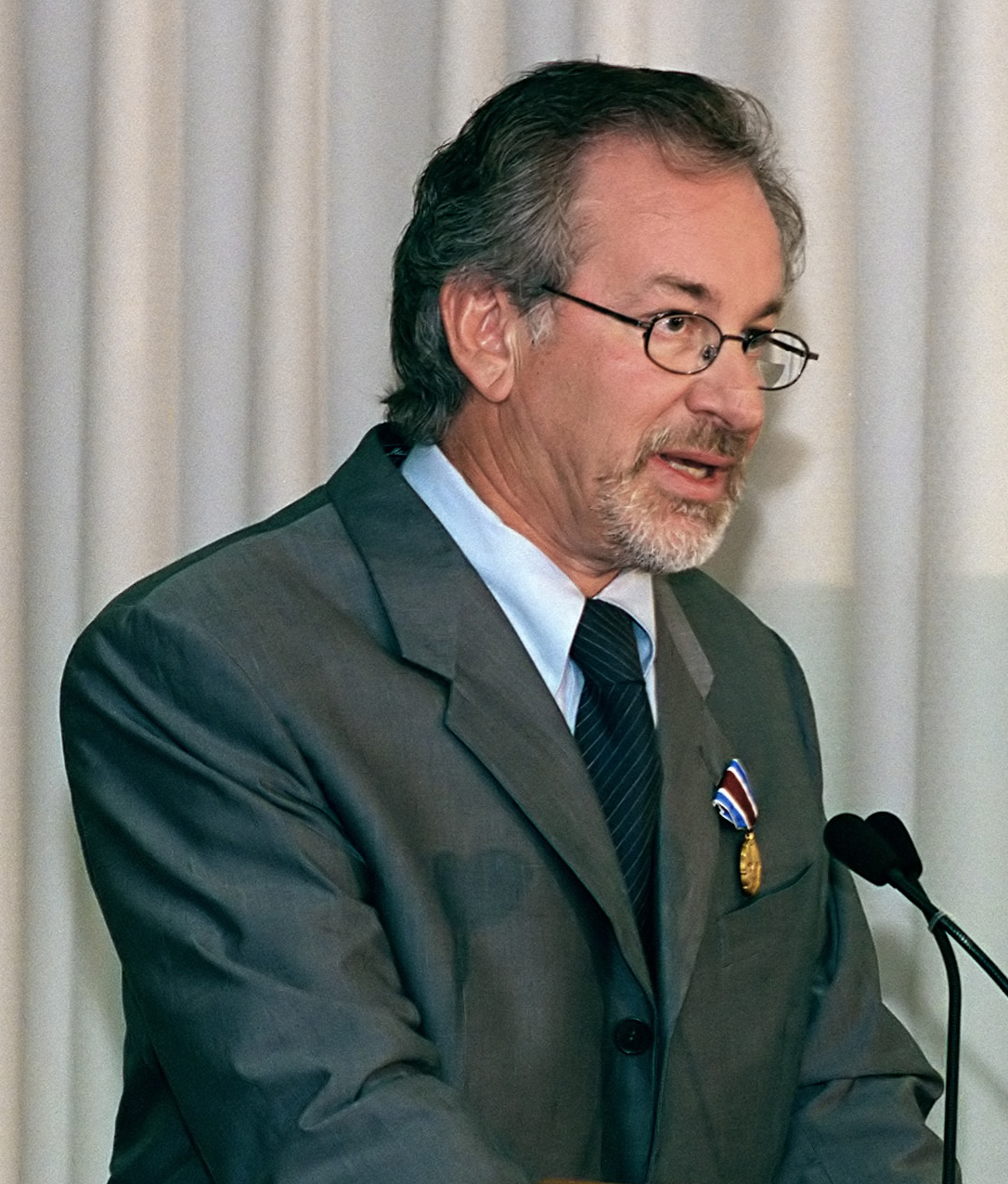
Steven Spielberg may be the most successful storyteller alive. He directed some of the most famous movies of all time: Jaws, E.T. the Extra-Terrestrial, Jurassic Park, Schindler's List and Saving Private Ryan. His whole career is built on stories. Reading them off the page was always the hard part. Spielberg has dyslexia. At school he read two years behind his classmates and dreaded being asked to read aloud. Nobody knew why, and he did not find out himself until he was in his early 60s, decades after he had become one of the most famous film directors in the world.
"It explained a lot of things. It was like the last puzzle part in a tremendous mystery that I've kept to myself all these years." — Steven Spielberg, on his identification, Friends of Quinn interview, 2012
Quick Facts
- Full name: Steven Allan Spielberg
- Born: December 18, 1946, Cincinnati, Ohio, USA
- Known for: Film director and producer: Jaws, E.T., Jurassic Park, Schindler's List, Saving Private Ryan
- Identified at: In his early 60s, about five years before he spoke about it publicly in 2012
- His dyslexic strength: Visual storytelling, and an unusual depth of comprehension: because he reads slowly and takes his time, he retains almost everything he reads
Two years behind
Spielberg grew up in the 1950s, when dyslexia was rarely recognised and almost never assessed in children. "I was unable to read for at least two years — I was two years behind the rest of my class," he recalled. "And, of course, I went through what everybody goes through — teasing. The teasing led to a lot of other problems I was having in school, but it all stemmed from the fact that I was embarrassed to stand up in front of the class and read."
He was bullied, and felt like an outsider. Some of his friends struggled the same way he did: "Even my own friends who were just like me, we didn't have the skills to talk about it. I got bullied. I dealt with it by making movies. That was my cover up." His parents, at least, were behind him; he has credited their endless help with his schoolwork for getting him through.
The great escape
He started making films with a home movie camera as a boy, and discovered that behind a camera he was not behind at all: "When I felt like an outsider, movies made me feel inside my own skill set." The outsider feeling never left his work; he has said he drew on his own experience of not fitting in for the band of misfit kids in The Goonies (1985), which he wrote the story for and produced.
He dropped out of college for an internship at Universal Studios, the first step of an extraordinary career. (He later went back and completed his degree at California State University in 2002, partly to show his own children that education matters.) The boy who could not keep up in reading class became the director other directors measure themselves against.
The last puzzle piece
For most of his life, Spielberg simply knew that reading was slow and hard, without knowing why. Then, in his early 60s, he was assessed and identified with dyslexia. He spoke about it publicly for the first time in 2012, in a video interview with Quinn Bradlee for Friends of Quinn, a website for young adults with learning differences.
His reaction was relief, not regret: "I never felt like a victim." And the difficulty has never gone away; he has built his working life around it. "I'm in a business right now where reading is very important. It's of critical importance to me that I read books and scripts. And I've been able to overcompensate… I will take two hours and 45 minutes to read 120 pages — what most people can read in about an hour and ten minutes. I just know that I'm still slow at reading, but I've learned to adjust."
There is an upside he is quick to point out: "I'm slow, but I have great comprehension. I retain almost everything I read. I don't just skip over things, and I'm able to savour really good writing, because I really take my time going through a book r a script."
What he is doing now
Spielberg has never fronted a dyslexia campaign or charity. His contribution was the telling itself. When one of the world's most successful directors says, on camera, "I was two years behind and I was bullied, and here is why," it reaches parents and children in a way that no pamphlet can. Dyslexia organisations around the world still point families to that 2012 interview. He remains one of cinema's most active directors and producers well into his seventies; his semi-autobiographical film The Fabelmans (2022) revisited his childhood, and the young hero's escape from outsider status through a movie camera is Spielberg's own story, lightly fictionalised.
In his own words
"It is more common than you ever imagined. You are not alone. There are ways to escalate your reading skill and comprehension. It is something that you have the rest of your life, but you can sort of dart between the raindrops to get where you want to go. And it won't hold you back."
"I never felt like a victim. Movies really helped me — kind of saved me from shame, from bullying."
How do we know they have dyslexia?
Spielberg disclosed his identification himself, in the 2012 Friends of Quinn video interview with Quinn Bradlee; it was reported at the time by ABC News, the Child Mind Institute and many others. He said he had been identified about five years earlier, so he was around 60 at the time.
Home › Famous People with Dyslexia › Steven Spielberg
Photo Credit: Steven Spielberg: U.S. Department of Defense photograph (public domain), via Wikimedia Commons