Richard Branson: "It's My Superpower"
Last updated: November 2026
Richard Branson left school at 15, having struggled through every year of it. He went on to build the Virgin Group: hundreds of companies, from airlines to space tourism. Today he doesn't just mention his dyslexia in passing, he campaigns on it, worldwide, and calls the way his brain works his greatest business asset.
"It's my superpower."
— Richard Branson, on the dyslexic thinking behind his success, 2025
QUICK FACTS
- Full name: Richard Charles Nicholas Branson
- Born: July 18, 1950, Blackheath, London
- Known for: Founder of the Virgin Group: more than 200 companies, including Virgin Records and Virgin Atlantic
- Identified at: Not publicly stated. He left school at 15 without the instruction he needed
- His dyslexic strength: Connecting with people: reading a room, building relationships, and seeing the opportunity others miss
- Campaigning: Ambassador for Made By Dyslexia; a key contributor to DyslexicU, the "University of Dyslexic Thinking"
- How we know: No formal identification has been stated. He has spoken about his dyslexia publicly for decades in interviews and in his books, including as an ambassador for Made By Dyslexia.
The boy who couldn't do schoolwork
Branson grew up struggling in the classroom. He never received the proper kind of instruction a student with dyslexia needs, and schoolwork simply didn't land. He has been blunt about it ever since.
"I was dyslexic, I had no understanding of schoolwork whatsoever. I certainly would have failed IQ tests. And it was one of the reasons I left school when I was 15 years old. And if I'm not interested in something, I don't grasp it."
What he did have was confidence, creative energy, and a gift for connecting with people, backed by a supportive family. At 15 he walked away from school; at 16 he put those strengths to work.
From a school magazine to an empire
His first venture was Student, a youth magazine he started in 1966. He used the magazine to advertise and sell records by mail, very successfully, and soon opened his own record shop on Oxford Street in London.
With the shop thriving, he opened a recording studio in Oxfordshire in 1972. The first artist signed to the new Virgin Records label was Mike Oldfield, whose Tubular Bells became a huge hit. The Sex Pistols followed, and Virgin took off, growing over the decades into a group of more than 200 companies spanning music, airlines, holidays and, eventually, the Virgin Galactic space tourism venture.
The pattern of his career is the pattern parents should notice: the boy who failed at schoolwork succeeded at everything that played to his strengths: people, ideas, and the confidence to start again after a fall. Two of his best-known lines make the point:
"Do not be embarrassed by your failures, learn from them and start again."
"You don't learn to walk by following rules. You learn by doing, and by falling over."
What he's doing now
2025: Virgin StartUp, Made By Dyslexia and Virgin Unite launched Momentum, billed as the UK's first free business accelerator for founders with dyslexia, alongside research estimating how much entrepreneurs with dyslexia contribute to the UK economy. Branson: "Much of my success as an entrepreneur comes from my Dyslexic Thinking. It's my superpower." Made By Dyslexia also launched in the United States as a 501(c)(3) charity in 2025, with Branson as an ambassador.
2024: DyslexicU, described as the world's first "University of Dyslexic Thinking," launched in New York during UN General Assembly week, offering free courses through The Open University's OpenLearn platform, with Branson as a key contributor. The same year, the Intelligence 5.0 report from Made By Dyslexia and Randstad Enterprise argued that dyslexic thinking skills are among the most in-demand skills in the world of work.
2023: The DyslexAI campaign, launched by Virgin and Made By Dyslexia, called on workplaces to value and empower dyslexic thinking, including research on how people with dyslexia are using AI tools at work.
In his own words
"I was dyslexic, I had no understanding of schoolwork whatsoever... it was one of the reasons I left school when I was 15 years old."
"Do not be embarrassed by your failures, learn from them and start again."
Watch: Richard Branson on dyslexia
Richard Branson discusses his dyslexia
Branson featured on NBC's Today's Health
Return to the top of Richard Branson
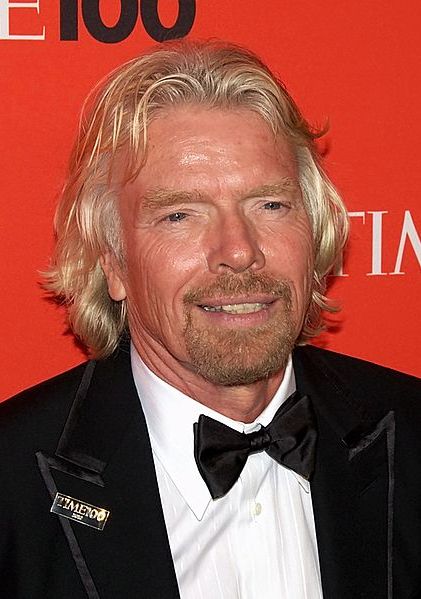
Photo Credit: Richard Branson: David Shankbone [CC-BY-3.0], via Wikimedia Commons