Whoopi Goldberg: The Girl They Called Slow
Last updated: November 2026. Originally written by Antonella Vaccarino for The Reading Well.
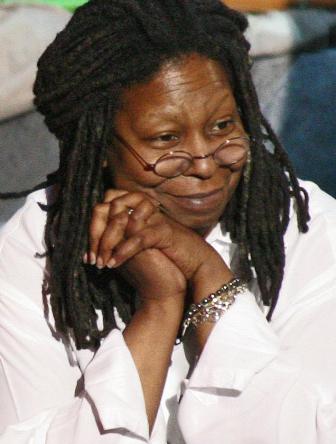
Whoopi Goldberg grew up being called slow. Nobody used the word dyslexia; in the 1960s, nobody around her was talking about it at all. She dropped out of school at 17 and only discovered, as an adult, why reading had always been such a fight. She went on to become one of the very few performers to win an Oscar, a Tony, an Emmy and a Grammy, and in 2025 she won an award for the very thing that was hardest for her: being read to, and reading aloud.
"I grew up dyslexic so hearing things read to me is heaven." — Whoopi Goldberg, accepting the Audie Award for her memoir narration, March 2025
QUICK FACTS
- Full name: Caryn Elaine Johnson
- Born: November 13, 1955, Chelsea, New York City
- Known for: Actor and comedian: The Color Purple, Ghost, Sister Act, co-host of The View; author; UNICEF Goodwill Ambassador
- Identified at: Adulthood. She grew up in the 1960s, when her difficulty had no name; the exact age has not been stated publicly.
- Her dyslexic strength: Story and voice: she loves stories, memorizes, and built a career on being told a tale and telling one back
- How we know: She was not identified as a child and describes discovering her dyslexia as an adult. She has spoken about it in interviews throughout her career and tells the story herself in her 2024 memoir, Bits and Pieces.
"They didn't call it dyslexia"
Whoopi was born Caryn Elaine Johnson in Chelsea, New York, and raised mainly by her mother; her father, a clergyman, left when she was young. Like many children with dyslexia of her generation, she grew up under false labels:
"When I was a kid they didn't call it dyslexia. They called it… being slow."
Luckily, she and her mother knew the labels were wrong; she was dealing with a real problem that simply hadn't been defined yet. But school was a struggle all the same, and she dropped out at 17. Only as an adult did she learn that her learning difficulties were due to dyslexia. With the help of a caring teacher and tutor, she built the skills and the confidence to thrive.
She has also said, strikingly, that the critics helped: the name-calling "went into making me the sum total of what I became, and what I've become."
Mortuary makeup artist to movie star
Before the fame came an unlikely run of jobs, bank teller, bricklayer, and makeup artist in a mortuary, before formal acting training in New York City. Her breakthrough one-woman Broadway show so impressed Steven Spielberg that he cast her in the lead role in The Color Purple, and she was a star.
Since then: a long and diverse career on stage, in stand-up comedy, in major films and on television, and, improbably for a woman who found reading hard, a highly successful children's book series, Sugar Plum Ballerinas. She is one of the few performers in history to have won all four of entertainment's major awards, Oscar, Tony, Emmy and Grammy, and she was the first woman to receive the Mark Twain Prize for American Humor.
Her relationship with books says everything about how she learned:
"I'm dyslexic, so there weren't a whole lot of books in my early life. But I did love stories. I love fairy tales and I love spooky stories… I still like to be read to."
What she's doing now
2025: She won the Audie Award for Narration by the Author for the audiobook of Bits and Pieces. Accepting it, she said: "I grew up dyslexic so hearing things read to me is heaven"; she connected the honour to her mother reading to her, and to audiobooks giving children with dyslexia access to schoolwork.
2024: Her memoir Bits and Pieces: My Mother, My Brother, and Me was published, including her account of growing up with dyslexia in the 1960s: never knowing there was an identification for what her brain did to the alphabet, and coping by memorizing.
2024: At the ReelAbilities Film Festival in New York in April, Goldberg said her dyslexia had "never been a source of shame."
In her own words
"Normal is nothing more than a cycle on a washing machine."
"I did love stories… I still like to be read to."
Return to the top of Whoopi Goldberg
- Home ›
- Famous People with Dyslexia ›
- Whoopi Goldberg
Photo Credit: Whoopi Goldberg: Daniel Langer, dlanger on Flickr [CC-BY-SA-2.0], via Wikimedia Commons