Homeschooling a Child with Dyslexia
Last updated: November 2026
Quick Facts about homeschooling with dyslexia:
- Homeschooling changes who does the teaching, not what works. Your child still needs explicit, systematic teaching of how letters map to sounds.
- One-to-one teaching is a genuine advantage: reading lessons can be short, daily and pitched exactly at your child’s level.
- You do not need a teaching degree. You do need a program with a clear teaching sequence, or a tutor to cover the reading block.
- In the United States, your school district must still evaluate a homeschooled child who may have dyslexia, free of charge. Ongoing services after evaluation are limited and vary.
- The rules for homeschooling itself differ by state, province and country, sometimes a great deal. Check yours before you start, not after.
Families arrive at homeschooling with dyslexia by different roads. Some choose it from the start, wanting teaching built around their child. Many more arrive after a hard school experience: a child who is falling behind, dreading mornings, or being taught in ways that do not match how they learn. Either way, the question is the same. Can you teach a child with dyslexia to read, at home, well enough? The honest answer is yes, provided the teaching itself is right. Dyslexia does not care where the lesson happens. It cares what the lesson contains.
This page covers what is specific to doing it at home: the teaching, the materials, assessment and the law outside school, and when to bring in help.
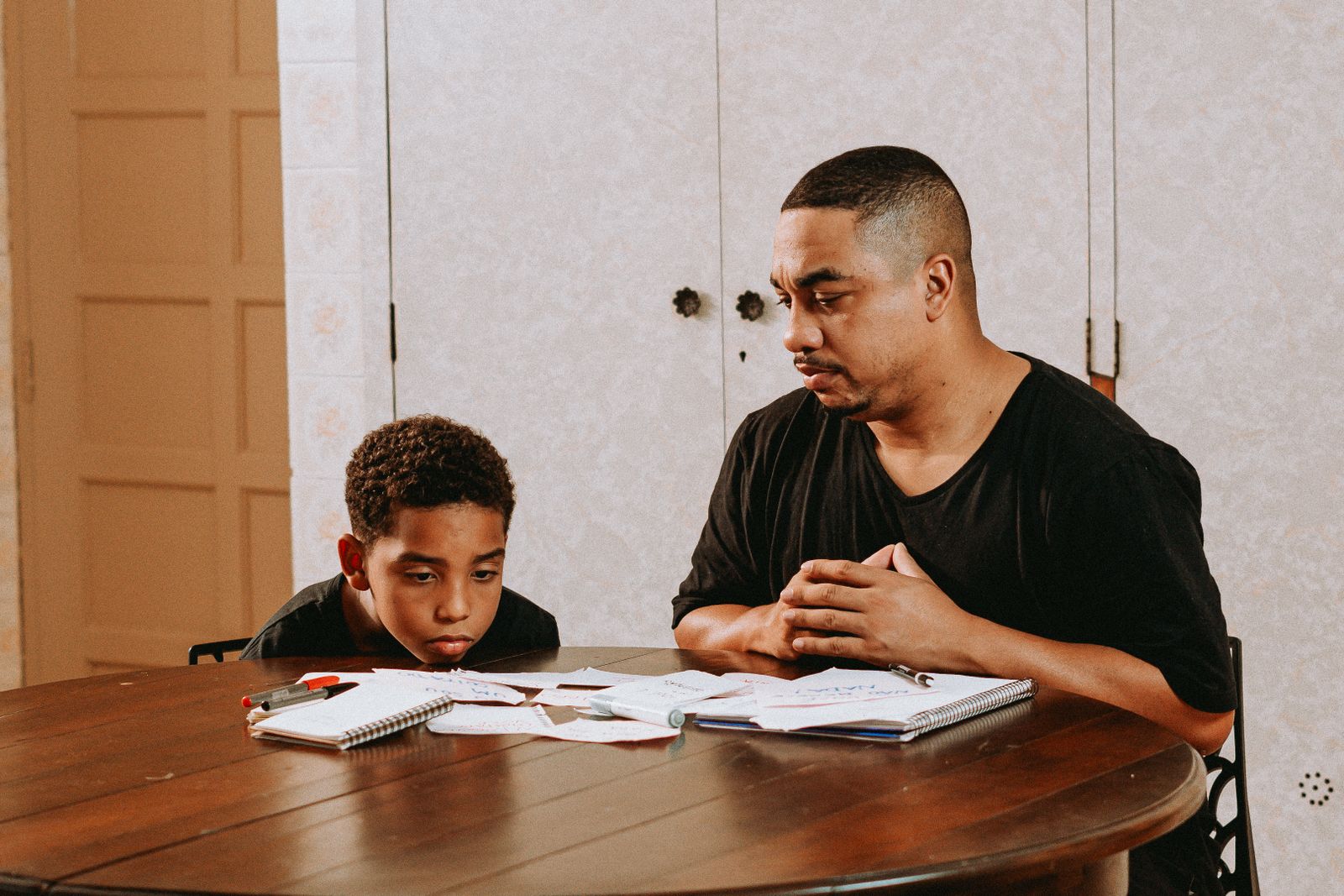
What does not change: the teaching itself
Dyslexia is a difficulty with accurate and fluent word reading, rooted in how the brain processes the sounds in words. It responds to one kind of teaching above all: structured literacy. That term describes teaching that is explicit (every pattern is taught directly, nothing is left to be picked up by exposure), systematic (patterns are introduced in a planned order, simple before complex), and cumulative (each new step builds on what is secure, with constant review). It covers the sounds of the language, how letters represent them, syllable patterns, word parts such as prefixes and roots, and how sentences and meaning are built.
That is the job whether the teacher is a specialist in a school or a parent at a kitchen table. A homeschool that skips it, hoping reading will emerge from being read to and surrounded by books, will usually disappoint. A homeschool that delivers it, even in short daily lessons, gives a child with dyslexia something many classrooms cannot: teaching at exactly their level, at exactly their pace, every day. Our page on the Orton-Gillingham approach describes the best-known form of this teaching, and our page on multisensory learning explains why lessons often involve seeing, saying, hearing and writing a pattern at the same time.
Structuring the reading lesson
Keep the reading lesson short, daily and predictable. Twenty to forty minutes of focused work, five days a week, will beat a two hour session twice a week, because memory for new patterns is built by frequent returns, not by marathon effort. Most structured programs divide naturally into parts: review of patterns already taught, the new pattern for the day, reading words and sentences that use it, dictation (you say a word or sentence, your child writes it), and a short read in a book matched to the patterns covered so far.
Two practical rules protect the lesson. First, work at the level your child is at, not the level their age says they should be at. A ten year old who is shaky on vowel teams needs vowel team work, without apology and without dressing it up. Second, separate the reading lesson from everything else. History, science, maths and stories should not wait for decoding to catch up. Use audiobooks, read aloud yourself, and let your child listen and discuss at their thinking level while the reading lesson works at their decoding level. Our pages on assistive technology and apps for dyslexia cover the tools that make this easy.
End the lesson while it is still going reasonably well. The last feeling of the lesson is the feeling your child brings to tomorrow’s.
Choosing a curriculum and materials
You do not need to invent the sequence yourself, and you should not try. What you need is a program that has one. Judge any reading program, packaged or free, by these questions:
- Does it teach letter and sound patterns in a planned order, and can you see that order before you buy? If the sequence is vague, the program is too.
- Is each pattern taught directly, with words to read and spell that practice exactly that pattern, before moving on?
- Does it include decodable books or passages, written so that nearly every word uses patterns already taught? Decodable text is what lets your child practice sounding out instead of guessing. (Our 44 phonemes page shows the full set of sounds and spellings being worked through.)
- Does it review constantly, recycling old patterns into new lessons so they stay secure?
- Does it place your child by skill, with a starting check, rather than by age or grade?
Some programs are written specifically for parents to deliver at home, with scripts and training videos, and need no teaching background. Others are school curricula that assume a trained teacher and can be hard work to adapt. Either can work. What does not work is a program built on memorizing whole words by sight, or on guessing words from pictures and context. Those methods ask a child with dyslexia to rely on exactly the skills that are weakest. Be equally wary of anything that promises to cure dyslexia, or to fix reading through exercises, games or devices that never involve reading words. Our page on dyslexia treatment goes through what the evidence supports.
For everything beyond the reading lesson, choose freely: the maths program your child enjoys, the history books they ask for, the science kit that makes a mess. Reading is the one area where the method matters more than the taste of the buyer.
Assessment when you are the school
A homeschool parent gives up the school’s built-in testing machinery, so you have to arrange assessment yourself. Two routes exist, and many families use both.
Through the school district (United States). Federal law in the US, through a duty called Child Find, requires school districts to locate and evaluate children who may have a disability, and that duty expressly includes children who are homeschooled. You can ask your local district, in writing, to evaluate your child, and the evaluation itself is free. Know the limit, though: an evaluation is a right, but the full services an enrolled child receives under an individual education program are generally not owed to a homeschooled child. Districts may offer limited services under a services plan, funded from a small federal share, and what is offered varies widely. Many families take the free evaluation, use the report to plan teaching at home, and buy any therapy privately. Our page on special education law explains the school side of these rights in more depth.
Privately. A psychologist or specialist assessor can evaluate your child whether or not they attend school, and the report is yours to use with tutors, exam boards and, later, colleges. Our dyslexia test page walks through the whole pathway, from first screening to a full assessment, including what a proper evaluation contains and what it typically costs.
In the United Kingdom and Canada, the picture is thinner. In England, parents who educate at home take on the teaching responsibility themselves, and there is no automatic school assessment route, although you can still ask your local authority for an assessment of special educational needs. In Canada, what a home-educated child can access varies by province, and most families who want a full assessment arrange one privately. Wherever you live, keep your own records as you go: dated samples of reading and writing, the programs used, and notes on what worked. A short file like this is gold if you ever need to show a professional, an exam board or a school your child’s history.
The legal basics, in plain terms
In the US, homeschooling is legal in every state, and every state sets its own rules: some ask only for a notice of intent, others require records, periodic testing or a portfolio review. In England, parents have a legal duty to make sure their child receives a suitable education. Home education is a lawful way to provide it, no registration or set curriculum is required, and the local authority may ask you to show how the education is suitable. In Canada, each province makes its own rules, and they range from simple notification to filing a learning plan.
Two habits will keep you safe in almost any jurisdiction. First, read your own state, provincial or local authority rules on an official source before you begin, and keep the paperwork they ask for, even if it feels like more than should be necessary. Second, if your child was previously enrolled and you are withdrawing them, do it by the book, in writing, so there is no gap in which your child is recorded as simply absent.
What about socialization?
It is the first question relatives ask, and it deserves a straight answer. Homeschooled children are not automatically isolated, and schooled children are not automatically well socialized. Social life for a homeschooled child is a logistics task: it has to be arranged rather than inherited. Cooperatives of homeschool families, sports, music, scouts and guides, part time classes and neighborhood friendships are the usual building blocks, and most areas have more of them than new homeschoolers expect.
There is also a side of the ledger that rarely gets mentioned. For a child with dyslexia who has spent years failing in public, every day, in front of the same audience, leaving that audience can be a relief rather than a loss. Many parents report that confidence, and willingness to try hard things, recovers at home before reading does. The social task is real, but for this group of children it cuts both ways.
When to bring in a tutor
Teaching your own child to read is intense, and there are good reasons to hand the reading block, or part of it, to someone else. Consider a tutor if:
- Progress has stalled. You have taught consistently for several months, following a structured program, and your child is barely moving. A trained eye can spot what is missing.
- The relationship is taking the strain. If reading lessons are damaging your life together, outsourcing them protects both the teaching and the parent you also have to be.
- Your own reading is not strong. Dyslexia runs in families. A parent who reads with difficulty can still run a good homeschool, but the reading lesson itself may be better taught by someone else, or by a scripted program with audio support.
- Your child is older and needs to move faster, or needs exam level skills, than you feel able to teach.
A specialist tutor trained in structured literacy or the Orton-Gillingham approach, teaching two or more sessions a week, is the usual model. In the United States, trained specialist tutors commonly charge between $60 and $150 an hour depending on training and location, which is why many families use a tutor for the reading block only, or for a defined stretch to get past a plateau. Online tutoring has widened the pool considerably, so a rural family is no longer limited to whoever lives nearby. Our page on dyslexia tutoring covers how to find and judge a tutor, including the questions to ask about training.
Knowing whether it is working
Schools test constantly; homeschools can drift without noticing. Build in simple checks of your own. Every month or two, have your child read a short passage at their instructional level aloud while you count errors and time it, and keep the numbers with the date. Keep dated writing samples. Note which spelling patterns are secure and which are not. You are looking for a trend over months, not a verdict on any single week: accuracy rising, speed rising slowly, patterns sticking after they are taught.
If the trend is flat for three or four months despite consistent teaching, change something. A different program, a tutor’s assessment, or a full evaluation if you have not had one. Flat progress is information, not failure, and it is far better caught by your own records than discovered a year later.
A word about stamina, yours included
Homeschooling a child with dyslexia asks a lot of a parent: teacher, assessor, advocate and parent in one person, with no staffroom to retreat to. Doubt is normal, including the 2 a.m. kind. Two protections help. Connect with other homeschool families, in person or online, ideally including some who are teaching children with dyslexia. Their practical knowledge is worth more than most books. And hold the decision loosely. Homeschooling is a choice you renew, not a sentence. Children go back to school, sometimes part time where dual enrollment is offered, and children leave school for home, at every age, in both directions, without it meaning anyone failed.
Wordsworth’s Word

Wordsworth is the Reading Well’s AI assistant and resident man of letters. This box is his.
A homeschool parent planning reading lessons is one of the best uses I know for an AI assistant, and I say that knowing my limits. Ask me for twenty practice sentences using only the patterns your child has learned so far, or a word list built on this week’s new pattern, or a quiz on yesterday’s lesson, and I can produce them in seconds, at exactly the level you set. Then check what I give you before you use it. I sometimes slip an untaught pattern into a sentence I claimed was decodable, because I work from probability, not from your child’s lesson book. You are the one who knows what has actually been taught. Used that way, with you as the editor, I can save you an hour of preparation a week. I cannot be the teacher, and nothing I produce replaces the sequence your program is following.
Final word on homeschooling with dyslexia
Homeschooling does not fix dyslexia, and it does not need to. What it offers is control: over the method, the pace, the length of the lesson and the emotional weather around learning to read. For a child whose difficulty is specific and whose teaching needs to be exact, that control is worth a great deal. Get the reading teaching right, keep records, use assessment when you need it, and bring in help before you burn out. Families do this successfully every day, and their children learn to read.
Return to the top of Homeschooling a Child with Dyslexia